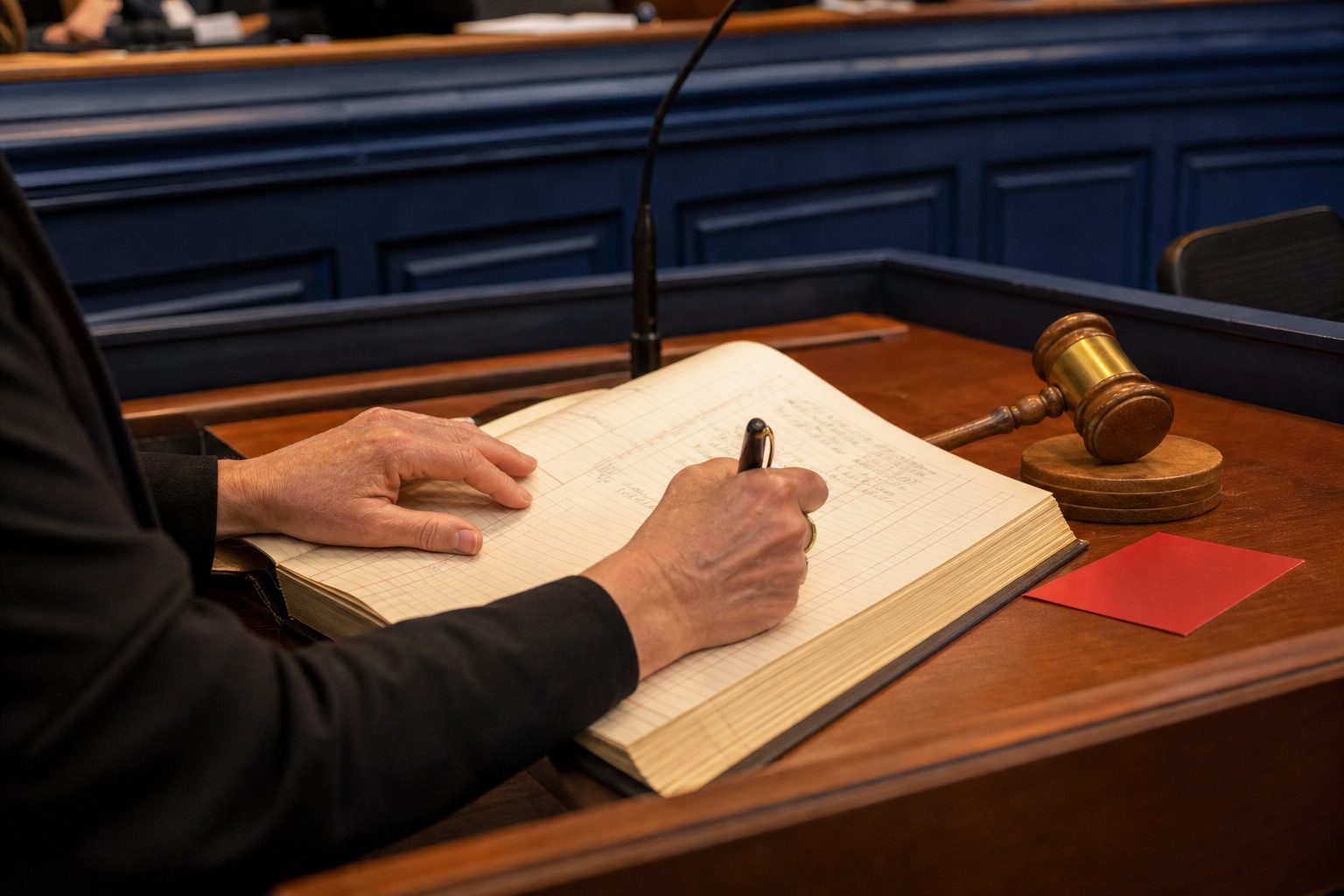
Adopted minutes, published the same night

Publish council minutes your residents can follow, with every vote indexed and searchable

GavelMinutes takes the agenda you already build, records each motion, second and roll call as the meeting runs, and turns the result into a clean minute page with a plain language decision summary at the top. Residents get a search box instead of a folder of scanned PDFs, and your office stops fielding the same three phone calls every Thursday.

  • 268 municipalitiesacross 34 states publish here
  • WCAG 2.1 AA outputon every published minute page
  • One afternoonfrom sign up to your first posted meeting
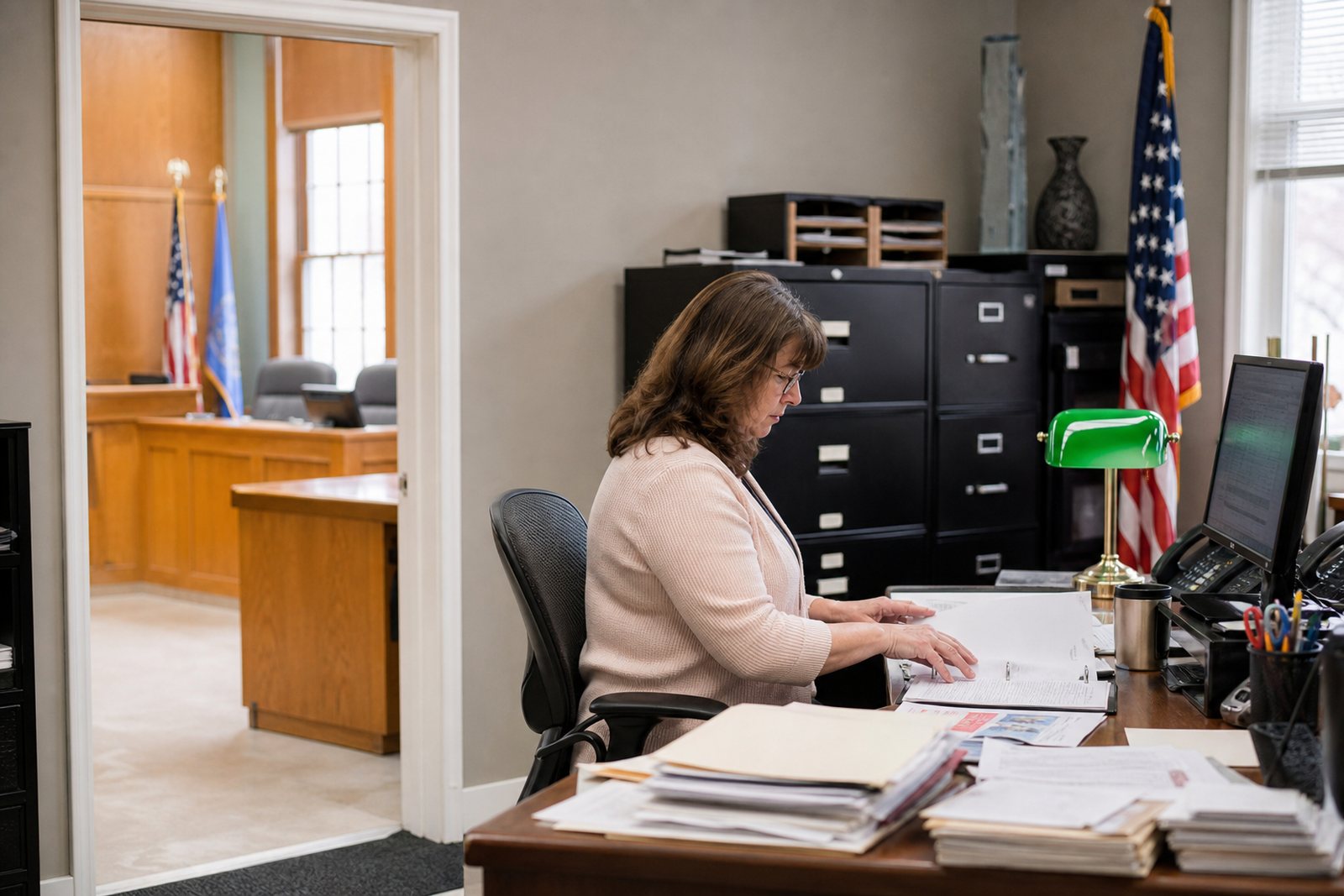
Municipal clerk assembling meeting records at a desk in a small town hall office, with the wooden council chamber visible through the open doorway
Clerk's office, regular sessionMinute book 2026

Item 01

The week after a regular session, as clerks actually describe it.

The backlog nobody budgets for

Nine days after the meeting, the minutes are still a legal pad and a memory

Every clerk knows the sequence. The council adjourns at 9:40, you drive home with a marked up agenda, and then the real work starts: reconstructing who moved what, which amendment carried, and how to say it so a resident on Maple Street understands it without calling the office.

Four evenings per meeting

Clerks in towns of 5,000 to 15,000 report spending 9 to 14 hours turning one regular session into minutes fit for adoption. Transcribing, checking the vote tallies against the recording, formatting, and proofing all happen after hours.

At a loaded rate of $34 an hour, that is about $442 of staff time per meeting, or $10,600 a year for a council that meets twice monthly.

The Thursday phone calls

Residents rarely ask for a document. They ask what happened to the sidewalk assessment, or whether the variance on Third Street passed. Somebody has to open the file and read it aloud over the counter.

Offices we work with logged an average of 38 such calls a month at roughly 11 minutes each: 7 hours of front counter time that produced no record.

Requests for what is already posted

A large share of public records requests in small offices ask for a document that has been on the town website for months. The requester simply could not find it, so the clerk runs the whole intake anyway.

Each avoidable request still burns about 90 minutes of search, review and written reply, plus the statutory clock you have to watch.

PDFs that return zero results

A flatbed scan of the signed minute page has no text layer. Your site search finds nothing inside it, Google indexes nothing, and the resident draws the least generous conclusion about why.

One county office we onboarded had 1,412 posted pages with no searchable text going back to 2009. None of it counted as public access.

Item 02

Order of business, from packet to published page.

How it works

Four steps, and the fourth one happens while you are still packing up the chamber

GavelMinutes does not ask you to change how your council runs. It follows the agenda, captures the action, and produces the two documents your office needs: the formal minutes for adoption and the readable decision record for the public.

  1. Bring in the agenda you already published

    Upload the packet as a Word file or PDF, paste it from your agenda management system, or pull it from the page where you post it. GavelMinutes reads the numbering, splits consent items from regular business, and gives every agenda item its own slot waiting for an outcome. Attachments, ordinances and staff memos stay linked to the item they belong to.

  2. Record the action while the meeting runs

    Tap the item, name the mover and the second, and mark the vote: voice, roll call, ayes and nays, abstentions and recusals. Amendments nest under the main motion so the order of business stays intact. It works on a laptop with no connection and syncs when you are back on the network, which matters in chambers with one weak access point.

  3. Write one plain sentence per decision

    For each item GavelMinutes drafts a one line summary in ordinary English, drawn from the motion text and the vote you recorded. You edit it in the same screen. Nothing is published as final until the council adopts the minutes at the following meeting, and the adoption date, the motion that adopted them, and the version history are all stamped on the record.

  4. Publish, index, and let residents find it

    Push the page to your municipal website as an embed or on your own gavelminutes subdomain. Every word becomes searchable across boards and across years, so a query for "short term rental" returns the planning commission discussion in March and the ordinance the council adopted in July. Your posting notice, packet and video link sit on the same page.

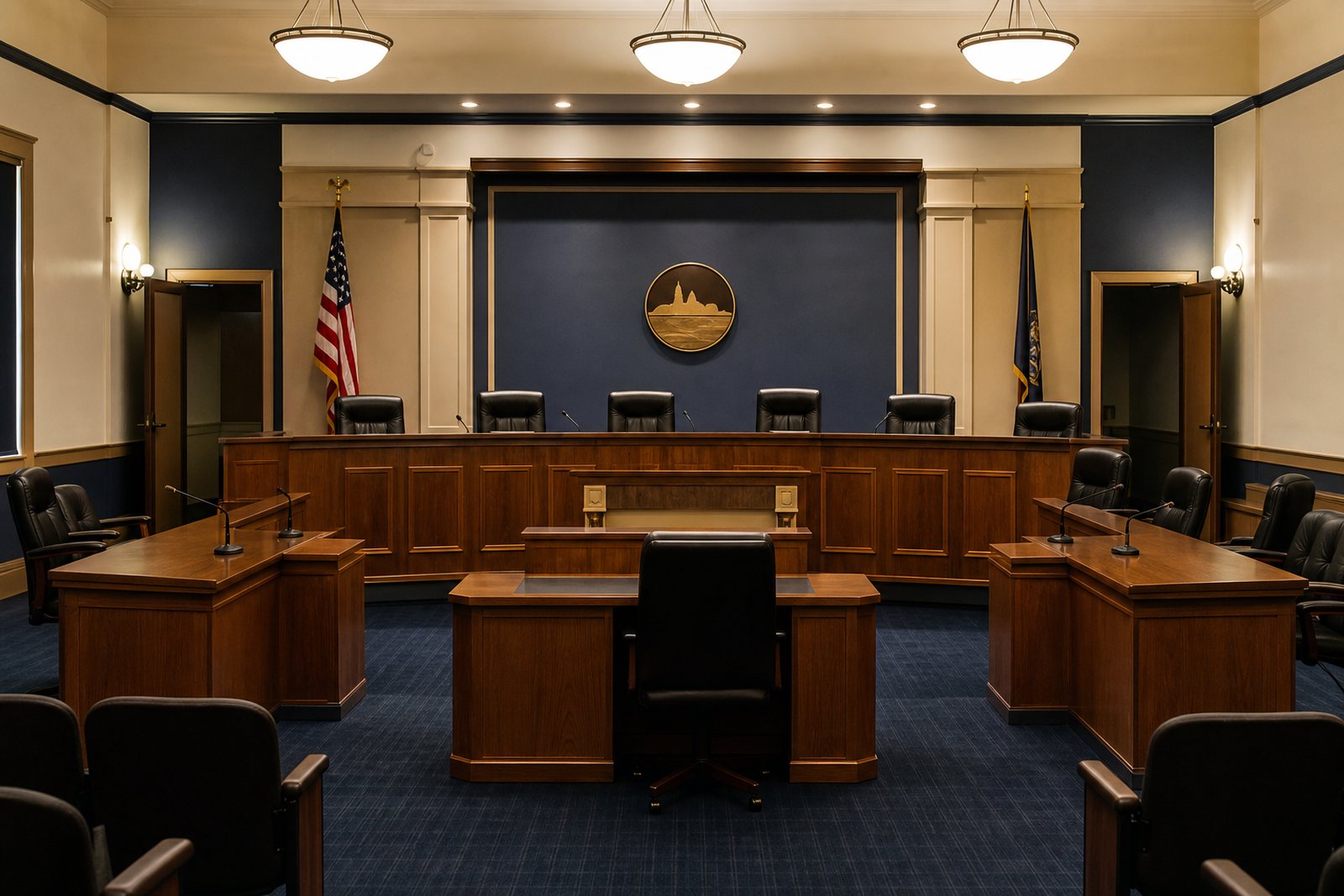
Empty small town council chamber with wooden desks, table microphones and civic flags under warm overhead lighting before a regular session
Council chamber, before the gavelRegular session

Item 03

Built around the minute book, not around a generic document manager.

What is in the software

Six things a clerk's office needs, and nothing that belongs in an enterprise suite

Every feature here exists because a clerk asked for it during a Tuesday night session. There is no CRM, no workflow builder, no dashboard of vanity charts.

Agenda item linking

Every line of the minutes stays bound to the agenda item, the staff report and the ordinance draft it came from, so a reader can move from the decision back to the packet in one click. When the item returns to a later meeting, the software threads the two sessions together automatically.

Motion and roll call recorder

Log the mover, the second, the amendment, and each member's vote as ayes, nays, abstentions or recusals, with a running quorum count in the corner of the screen. Tallies are calculated for you, so a five to two vote never gets typed up as four to three at eleven at night.

Plain language decision record

Alongside the formal minutes, each meeting gets a short public summary written at an eighth grade reading level: what was decided, what it costs, and what happens next. Clerks edit every line before it goes out, and the formal minutes are never altered by the summary.

Public search across every board

One search box covers the council, the planning commission, the zoning board of appeals, the library board and anything else you publish, back to the first meeting you import. Results show the meeting date, the agenda item number and the decision line, so residents land on the answer rather than a 60 page packet.

Retention schedules and exports

Set your state's retention rule once per record series and GavelMinutes tags each meeting with its disposition date and holds permanent records permanently. Full exports come out as PDF/A with a signed manifest, so your archive survives a change of vendor or a change of clerk.

Posting and accessibility checks

Before a page goes live the software checks heading order, contrast, table headers, link text and alternative text against WCAG 2.1 AA, and warns you if a scanned attachment has no text layer. It also timestamps when the notice and packet were posted, which is the record you want if anyone questions your open meetings compliance.

Item 04

Measured across 268 subscribing municipalities during 2025.

What changes in the office

Four numbers our clerks quote back to their councils at budget time

These come from before and after measurements taken 90 days apart in offices that publish at least one regular session a month. Every figure is an average, and every office gets its own version of it in the quarterly records review.

9.5 hrs

Returned per regular session

The gain comes from three places: the agenda no longer gets retyped, vote tallies are computed instead of reconstructed from the recording, and the formatting work disappears because the page is generated from structured fields. Clerks report the biggest single change is not having to listen back to audio.

41%

Fewer records requests in year one

When the decision record is searchable, residents and reporters find the document themselves. Offices see the sharpest drop in requests for minutes, resolutions and vote tallies, which are the three that used to arrive most often and take the longest to fulfill.

4,300

Monthly reads in a town of 9,000

That is the median for the archive page in our mid size subscribers, up from roughly 260 when minutes were posted as scanned PDFs. Search referrals account for most of the increase, because plain language summaries match the words residents actually type.

38 min

From adjournment to posted draft

Because the action is captured live, the draft minutes are essentially written when the gavel falls. The remaining half hour is the clerk reading the whole thing once, correcting names, and pressing publish before leaving the building.

Item 05

On the record, from offices that publish every month.

Clerks on the record

The people who sign the minute book, in their own words

We asked three subscribers what actually changed. None of them mentioned software.

I have been a clerk for nineteen years and no council member had ever mentioned the minutes to me. Two weeks after we switched, our mayor pro tem read the decision summary out loud at a chamber breakfast. The part that actually sold me was smaller than that: I stopped writing minutes on Sunday afternoons.

Marla Tenpenny City Clerk, City of Marion, Iowa

Our zoning docket is the thing residents genuinely care about, and until last year you had to know the case number to find any of it. Now a neighbor types their own street name and gets every hearing the board held on that parcel since 2016. Counter complaints about the website dropped off inside a month.

Dwayne Kirkland Village Administrator, Village of Ottawa Hills, Ohio

We are a two person office covering the council, planning and zoning, and the lodgers tax board. Capturing roll calls live is what saved us, because I used to rebuild vote tallies from a phone recording at seven in the morning. Setup took one afternoon and our old minutes back to 2011 came across without me touching them.

Renata Salgado Deputy Town Clerk, Town of Silver City, New Mexico
11,600
Meetings published through GavelMinutes since 2021
34
States with subscribing municipalities and districts
97%
Of offices renew after their first full budget year

Item 06

Priced by the size of the body of government, not by user seat.

Schedule of fees

Three plans, sized the way a municipal budget line is sized

We do not charge per clerk, per meeting or per page. Pick the plan that matches the number of public bodies you publish for, and add deputies and department staff at no extra cost.

Village

Villages, townships and special districts under 2,500 residents.

$79 per month

  • Two public bodies, for example a council and one board
  • Unlimited meetings, agenda imports and attachments
  • Plain language decision summary on every meeting
  • Public search page plus an embed for your website
  • Accessibility checks against WCAG 2.1 AA
  • Import of your last three years of minutes
  • Email support answered the same business day
Request a village walkthrough

County

Counties, regional authorities and cities above 35,000 residents.

$379 per month

  • Everything in Town
  • Unlimited public bodies, departments and subdomains
  • Single sign on and role based permissions for staff
  • API and page components for your existing website
  • Custom retention schedules per record series
  • Full historical import with a page by page quality review
  • Named onboarding lead and a quarterly records review
Request a county quote

Every plan is billed monthly in US dollars and can be cancelled at any time from the account settings page, with no notice period and no termination fee. There is no set up charge, the historical import is included in the plan price, and purchase orders and annual invoicing are available for offices whose finance department prefers them. If you cancel, you keep a complete PDF/A and JSON export of every meeting you published.
Item 07

Questions raised most often by clerks and finance officers.

Questions from the floor

Answers we give before anyone signs a purchase order

Reading room

Written for the desk that produces the record, and checked against the statutes it cites.

The Minute Book

A working magazine on open meetings law and the craft of the record

The Minute Book is where we publish what clerks ask us during onboarding: how to word a roll call, which minute format your board is actually required to keep, and how long the audio has to survive. Three recent entries are below and nine are in the index.

Read every article in The Minute Book

Item 08

New business. Bring one recent agenda and we will do the rest.

Request a walkthrough

Send us your last regular session and see it published before you decide

Tell us which boards you publish for and we will load one of your own past meetings into GavelMinutes, agenda, motions, votes and all, then walk your office through the result on a 30 minute call. There is no obligation and no sales sequence afterward.

A person reads every message, usually within one business day, and we answer during United States office hours. If your council packet is easier to send by email, write to jimenezjulien42@gmail.com and attach a recent agenda.